I Have A Store C202
by MarineTLChapter 202: A Huge Win
In later years, some hotels often prepared tea powder for their guests.
Tea powder was made from fresh tea leaves of the tea tree, steamed at high temperatures and then processed using special techniques before being instantly pulverized into ultrafine powder finer than 400 mesh. It was said to preserve the original color, nutrients, and medicinal properties of the tea to the greatest extent possible.
Besides being drinkable, tea powder was widely used in cakes, bread, noodles, biscuits, sunflower seeds, mooncake fillings, health products, and daily chemical products to enhance their nutritional and health benefits.
Zhou Yimin had even heard people say that the development and application of green tea powder marked a major leap in the history of Chinese tea science—a revolution in the traditional way people consumed tea. Instead of just drinking it, people could now “eat” tea, allowing for fuller absorption of its beneficial biological components.
At the time, he’d thought that sounded a bit exaggerated.
“Old Zheng is treating us to dinner tomorrow. You free?” Wang Weimin asked.
He genuinely wasn’t sure if this guy had time—Zhou Yimin was rarely ever at the factory.
While the procurement department staff didn’t have to report to the factory daily, Zhou Yimin’s lax presence was pretty unique. Unless something came up, he was hardly seen around.
Now that their former supervisor had left the steel factory, Wang Weimin just referred to him as “Old Zheng.”
“Yeah, I’m free,” Zhou Yimin nodded.
It had been a while since he’d last seen Section Chief Zheng.
If possible, he wanted to keep in touch—maybe get help “moving goods.” After all, Zheng had been transferred to serve as Deputy Factory Director and was now in charge of logistics.
There was definitely a foundation for “cooperation” between them.
“Alright, I’m off. Gotta drop by Director Ding’s office,” Zhou Yimin said as he casually swiped a snuff bottle off his desk.
Wang Weimin laughed and cursed, “Get outta here!”
He wasn’t angry at Zhou Yimin’s behavior—in fact, he found it amusing.
Zhou Yimin had brought him a can of tea; taking a snuff bottle in return was no big deal.
Besides, when a subordinate takes something of yours, it usually means they genuinely see you as a leader. If they didn’t feel close to you, they wouldn’t dare.
What Wang Weimin didn’t know was that snuff bottles like that would be worth a fortune in later years.
Right now, they weren’t worth much. Many so-called “antiques” seemed to have lost their value in this era—sold for just a few bucks a piece, and guaranteed to be authentic.
That can of Tieguanyin Zhou gave him, on the other hand, probably cost more than Wang Weimin’s monthly salary.
So no matter how you looked at it, he’d come out ahead.
As a leader, profiting off your subordinate didn’t seem quite right.
So he added, “Wait—take this too.”
With that, Wang Weimin opened his desk drawer and pulled out a ticket.
Zhou Yimin glanced at it—it was a voucher for a sewing machine. He accepted it without hesitation. Just so happened that his family still didn’t have one.
At the time, the “four big items” were the “three turners and one sound”: radio, bicycle, sewing machine, and wristwatch.
They already had the radio, bike, and watch—only the sewing machine was missing. Strictly speaking, there wasn’t a single sewing machine in all of Zhoujiazhuang yet.
If he brought one back, it would probably draw quite a crowd.
“Heh, thanks!”
Once outside, Zhou Yimin put the sewing machine ticket away and looked over the snuff bottle in his hand. Turned out it was an inner-painted snuff bottle.
Thanks to Dapeng and the others, Zhou Yimin had gotten his hands on quite a few antiques recently, so he’d gained some understanding of them. Of course, it was all very surface-level.
He wasn’t trying to become some appraiser or collector—just a basic understanding was enough.
Inner-painted snuff bottles originated in the capital and were once prized possessions of royal nobles and high officials.
They were a uniquely Chinese traditional craft. Since their production began in the Jiaqing era of the Qing dynasty, nearly 200 years had passed. These bottles were like dazzling gems in the hall of Chinese folk art.
Inside the snuff bottle was a painted scene: among green mountains and clear waters, beneath a tall willow tree, three carefree, innocent children dressed in colorful clothes played happily on the grass. One had a strip of cloth tied behind his head, while the other two—one lying low in hiding, the other shielding himself with his hands—wore expressions of pure joy and childlike charm, completely absorbed in the game.
The bottle seemed to be made of “liaoqi” (colored glassware).
“Liaoqi” referred to vessels or handicrafts made from glass infused with pigments.
Although Zhou Yimin wasn’t an expert, he had a good eye.
This snuff bottle was clearly top quality. In the future, it would easily fetch over a million.
And now? He’d gotten it for just a can of regular tea.
Huge win.
Zhou Yimin arrived at Director Ding’s office and knocked before entering.
When Ding, who had been scolding another section chief, saw that it was Zhou, his face instantly changed. He smiled and told the other man, “You may go now.”
Zhou had seen that section chief before—his surname was probably Jin.
The man gave Zhou Yimin a grateful look, then carefully left, closing the door behind him.
How could he not be grateful?
His section had messed up, and Director Ding was cleaning up the mess—getting scolded was expected.
From what he knew of Ding, the man usually scolded you once and then let it go. So the fact that he’d been let off today meant the issue was done with. And the reason he’d been let off so quickly? Zhou Yimin’s arrival.
“Sit down, Yimin. Here, have a pomelo. This one’s from the South—you can’t get these in the North,” Director Ding said with a grin.
The pomelo had been gifted to him.
Last night, his father-in-law had given two big lobsters to an old superior. That family had returned the favor with two pomelos, and he’d been given one of them.
Compared to the South, the northern climate was cooler. Pomelos thrived in warmer regions.
What’s more, the North had wide temperature swings between day and night, and the air was especially dry in autumn and winter—not great for growing pomelos. Northern-grown ones often had poor texture and were hard to peel.
What Ding Shengtai didn’t know was that Zhou Yimin had a hundred pomelos—red-fleshed ones—in his store backpack.
Still, he took a segment and ate it.
Honestly, it wasn’t very good—way too sour.
Having grown up in the South, Zhou Yimin knew this wasn’t the best season for eating pomelos.
After that, Director Ding briefed Zhou Yimin on a recent meeting, which involved threshing machines.
“Threshers for rice and corn? I’ve actually been thinking about that. I’ll sketch out some plans later,” Zhou said.
“Good. The factory director mentioned the ministry leaders are pressing hard.”
Zhou understood—grain harvesting season was approaching.
In places like Zhoujiazhuang, where the crops had been properly irrigated during the heading stage, the grain had filled quickly and matured early. Other villages would probably need a few more days.
“Oh right—come have dinner at my place tonight,” Director Ding added, patting Zhou’s shoulder.
That, too, had been a request from his father-in-law.
(End of Chapter)
Recommendations

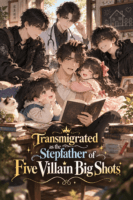
Transmigrated as the Stepfather of Five Villain Big Shots
After accomplishing nothing for half his life, Chen Liyang woke up to find he had transmigrated into a book, becoming the scumbag stepfather of five villain big shots!Fake Young Master Banished to the Countryside Makes a Comeback with His Wife and Children
Opening his eyes, Xie Zhao found himself back in 1983.Life Goes On
In 2001, Tonglin Town was still the poorest small town in Pingcheng. There were not even any police here, so the people had their own way of dealing with problems.Orphanage I Opened Went Viral Nationwide
Lu Qingqiang inherited a run-down orphanage, and inside were more than ten starving, pitiful kids crying from hunger.Accidentally Born in the ‘60s
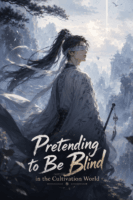
Zhen Zhen was reborn in the forest area in the 1960s with a drop of the blood of the ancient gods. The awakening of the blood of the gods not only gave Zhen Zhen one power after another, but also made her the most favored little lucky star in the family!Pretending to Be Blind in the Cultivation World
Wen Xu was born face-blind. No matter how handsome or beautiful the cultivators in the cultivation world were, they all looked like wooden posts to him.Goodnight, Little Jasmine
After giving birth out of wedlock, He Chong’s mother, He Mi, married Gu Hongsheng, a businessman twenty-five years her senior, as his second wife. Following He Mi’s death, He Chong returns to claim his inheritance and fulfill his mother’s final wish to be buried alongside Gu Hongsheng, only to face relentless opposition from the Gu family.Crazy Gossiping in the Cultivation World
Ning Xu had just transmigrated and was still confused when her senior sister dragged her off to attend the morning lecture. Senior Sister said, “You have three spiritual roots—not very outstanding. Unless something unexpected happens, you’ll probably remain an outer sect disciple for life. If you’re lucky and catch the eye of a true master, you might have a chance to become an inner sect disciple.”Villain’s Dad Lives a Laid-Back Farming Life
Zhao Mengcheng transmigrated into the early-deceased father of a villainous family.Beneath the Cliff
Deep in the mountains lies Xinghua Village, where another Trafficked Bride has been brought in. Word has it she is a college student.





0 Comments