I Have A Store C311
by MarineTLChapter 311: Security Fund
Before anyone realized it, a few days passed, and Li Guang brought some good news. He reported that the patent for the airbag had been successfully secured, with a protection period that lasts for twenty years.
Li Guang requested the country to send representatives for negotiations, as he had already invited prominent automobile companies for discussions. If the patent were owned personally, it would be less trouble, but this time, it belongs to the country, requiring national representatives.
The country took this matter seriously, sending high-ranking leaders personally to lead the delegation.
When Li Guang received the high-ranking leaders, it underscored the significance of the negotiations due to the potential for substantial foreign exchange earnings.
Initially, the leaders wanted Zhou Yimin to join them, but he declined, and the leaders acceded to his wishes, going alone on a flight to Malaysia.
Li Guang invested considerable effort and capital in organizing these talks, leveraging numerous connections to ensure their success.
The auto giants were initially indifferent, but when Li Guang presented the patent certificate, they had no choice but to engage in negotiations.
Notably participating in these discussions were well-known auto companies like Ford, General Motors, Lincoln, and Japan’s Toyota.
The negotiations promptly began. The leader refrained from dictating, knowing that specialists should handle specialized issues. His presence was merely to provide oversight and prevent any mishaps.
Li Guang warmly welcomed the negotiators to his company’s conference room and served coffee to everyone present.
By this era, coffee had become quite common, having undergone the first and second coffee waves. The first wave took place between 1940 and 1960, known as the instant coffee era.
During World War II, the U.S. promoted economic consumption by partnering with South American countries to produce vast quantities of instant coffee, using mainly Robusta beans.
Although cheap, this coffee was bitter and often required sugar or creamer to improve its flavor.
The second wave, represented by Starbucks, boosted the rise of specialty coffee.
Starbucks popularized deeply roasted coffee, leading people to appreciate coffee’s flavor and quality, gradually embracing the shift from instant coffee to specialty coffee.
The leader didn’t understand the appeal of coffee, having a preference for tea.
Li Guang prepared premium teas for them.
Everyone quickly got to the point.
A Ford representative asked, “Li, what kind of cooperation are we looking at regarding the airbag?”
The representative hadn’t expected that this person would outpace their company, having already invented the safety belt and airbag. They were aware of the ongoing development of these features, with the seatbelt almost complete.
It felt like fate had played a prank, inventing the seatbelt while others owned the patent. Avoiding the patent to create something similar would be costly in time and resources, leaving them little choice but to agree unless unreasonable.
Recently, the company spent a fortune buying the seatbelt’s patent.
Unexpectedly, Li Guang now presented an even better product.
“Mr. Klan, there are two cooperation models. Firstly, for each car produced, you’ll pay $200. Secondly, an annual sum of $60 million,” Li Guang explained calmly.
He deliberately set a high price, giving room for negotiation.
The automotive representatives were taken aback at the $200 price tag, considering a car costs only two or three thousand dollars — making the airbag’s production a tenth of the cost.
The leader was shocked by the price, inadvertently spilling some tea. How could anyone suggest such a price of $60 million? Considering the country’s dollar reserves didn’t even match this amount!
Securing such a deal was unimaginable.
The nation desperately needed foreign exchange.
If successful, it would be a monumental achievement for them, Li Guang, and Zhou Yimin.
Klan protested, “Li, your price is too high; we can’t agree to it.”
$60 million a year was astronomical at this time, even more so considering there were four automotive companies present.
Li Guang replied slowly, “Mr. Klan, Ford produces about six to seven hundred thousand cars a year. If using the first cooperation mode, your company would pay around $120 million.”
Klan’s expression darkened, realizing Li Guang was well-prepared and informed about their company.
“Li, that’s still too high; we can offer $50 per car, the best we can do,” Klan feigned helplessness.
They had reviewed the video Li Guang sent, understanding the airbag’s significance, hence why they attended the negotiations.
“Mr. Klan, that’s too low, at least $190 per vehicle,” Li Guang stood firm.
The Chinese representatives wanted to speak but held back when the leader gave them a stern look.
While $50 per vehicle was appealing, including all companies, Ford alone would pay over $30 million for its annual production. The profit was extraordinary.
These funds were practically earned passively.
What more could one ask for?
Some Chinese representatives feared a sudden change of heart from the other side and wanted to secure the agreement promptly.
Thankfully, the leader stayed composed, discouraging rash decisions.
He realized that their preparation was inadequate for these negotiations.
From this point, Li Guang would be their primary negotiator.
Yet again, professional matters called for professional attention.
At this point, General Motors and Toyota joined the fray, criticizing Li Guang for pricing high, affecting their profit margins.
The Chinese representatives hadn’t anticipated such negotiations, clashing like bargaining with street vendors.
Following intense bartering, they agreed on an annual patent fee of $35 million per company, totaling $140 million annually, all without doing anything beyond collecting licensing fees.
The leader was almost dumbstruck, anticipating an amazing foreign exchange amount of about $40 million, never expecting fourfold that figure.
Considering the country’s foreign reserves totaled only about $40 million, this $140 million was astronomical.
Securing such high patent fees was phenomenal.
The leader gained insight from Li Guang’s words: the auto industry would be significantly lucrative in the future.
Upon returning, he intended to write a detailed report for the central authorities, hoping the country would prioritize the auto industry.
Just the airbag patent alone could yield annual fees surpassing $100 million; when reported domestically, it would cause a sensation.
After finalizing the cooperation, Li Guang saw off Klan and his group.
The leader was still processing the event, as were his delegation members, all exchanging glances.
They were grateful that Li Guang led the negotiations, as they could’ve faced significant losses.
Perhaps a few tens of millions might have easily satisfied them, and signing a contract under such beliefs might have felt rewarding.
Post-negotiation, Li Guang returned: “Leader, I may have overstepped.”
In truth, he underestimated the safety belt and airbag’s potential economic returns. His net worth was only a few billion, yet this showed that past efforts seemed futile.
Others could effortlessly earn such sums without risk.
Zhou Yimin would’ve approached things differently.
Understanding the airbag’s future output reaching tens of billions of dollars wouldn’t make charging $1-$2 billion annually seem excessive.
“Mr. Li, don’t mention it. Thanks to you, had we negotiated on our own, we likely would’ve agreed to $50 without hesitation,” the leader acknowledged gratefully.
He was eager to share this news with superiors, believing it would astonish many. Zhou Yimin truly was a blessing, inventing things that brought immense revenue to the nation.
At Li Guang’s insistence, the leaders stayed two more days.
Indeed, when the news returned home, it even attracted national leadership’s attention, prompting a deeper investigation into the situation.
In Zhou Family Village, news of discovering an underground river spread wide, garnering envy from numerous villages. Adequate water is crucial for farming.
The old secretary approached Zhou Yimin: “Yimin, could you help the village buy some sweet potatoes and cornmeal?”
The village had considerable funds at disposal, influenced by past famine, encouraging converting cash to grain to prevent food shortages.
Also, to develop farming, ample grain was essential.
Zhou Yimin pondered: “Old Secretary, how much sweet potato and cornmeal are you looking for?”
If the amount wasn’t significant, it was manageable; too much would require careful consideration.
“How about 5,000 pounds each?” the old secretary inquired.
Building the reservoir consumed substantial grain daily, hence the desire for reserves.
“Alright, I’ll deliver it within a couple of days,” Zhou Yimin concluded.
Supplying several thousand pounds of grain wasn’t a major issue.
The old secretary was relieved by Zhou Yimin’s assurance—a hefty grain amount, especially in this climate.
Zhou Yimin proposed: “Old Secretary, should the village consider establishing a security fund?”
“Security fund?” The old secretary was puzzled.
Zhou Yimin clarified: “During the hunting expedition, we encountered someone who faced danger. Without timely intervention, it’s likely he wouldn’t have survived.”
“He’s a pillar of his family; any incident could shatter them.”
The concept was akin to insurance in later eras.
The old secretary started to comprehend: “Yes! Yimin, please elaborate.”
Many men were family pillars; problems would devastate households.
“If the village eliminated such worries, people could work harder, knowing they and their loved ones would be covered by the security fund if injured or killed in service to the village.”
“Good, Yimin, your suggestion is excellent.”
The fund would ensure basic family needs, not handouts. Villagers would still participate in labor; only those in dire straits would receive village aid, sparing unnecessary provisions.
Villagers would likely support it, knowing all benefit.
Yet such matters exceeded the old secretary’s authority; a village meeting was needed to discuss and potentially approve it.
Nowadays, the people made decisions, not one-man rule.
Although he could make village decisions, protocol had to be observed.
After lunch, the old secretary summoned each household’s representative for a meeting.
Although curious, they complied with his instructions.
With everyone present, the old secretary announced, “I gathered you for a matter requiring your input.”
Villagers were curious. Usually, the old secretary handled village affairs alone unless something substantial arose.
“Old Secretary, what’s this matter that requires our presence today?” Zhou Xucai inquired.
The old secretary replied, “Yimin proposed a security fund for the village.”
“Those injured or killed in service would see their family’s basic needs covered,” he explained briefly.
The villagers began discussing among themselves.
“This proposal is good; think of that uncle who was nearly killed by boars,” Zhou Dashan promptly agreed.
Zhou Dahui echoed his support: “Indeed, a great idea!”
As expected, there were no objections.
Those self-interested knew its benefits. Who knows what the future holds? In adversity, genuine aid for basic needs provides relief.
“Let’s vote. Raise your hand if you agree,” the old secretary instructed.
Formalities had to be observed.
(End of the Chapter)
Recommendations

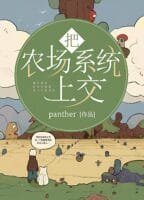
Submitting The Farm System
Qin Yun returned to his hometown after graduation and bound himself to a farming system. The moment he obtained the system, Qin Yun decisively turned it over to the authorities.Police Dog
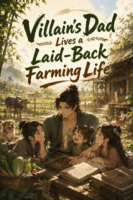
He used to be a tall man, six feet tall. But after a freak accident, he was reborn as the second-generation offspring of a police dog. At first, he wanted nothing to do with it. Later: a government job? Yes, please! … After a freak accident, he went from being a tall six-foot man to a freshly weaned German Shepherd pup at the police…Villain’s Dad Lives a Laid-Back Farming Life
Zhao Mengcheng transmigrated into the early-deceased father of a villainous family.Rebirth A Stay-at-Home Dad’s Leisurely Life
Cao Shujie, who had died suddenly after years of working late into the night, was reborn back in 2011. In this life, he wanted to live a little more easily—spend more time with his wife and kids, take his child and dog for walks when he’s not busy, and earn a bit of living money along the way!Era: Starting from Mountain Farming and Hunting
This novel follows the story of Lin Heng, a 60-year-old man who unexpectedly returns to the 1980s, a time of slow-paced life and pure thoughts. He aims to live a happy life with his wife and children, starting with hunting in the mountains and FarmingAfter the Villain Awakens, He Become the Enemy’s Favorite Through Misunderstanding
Liu Ming, heir to District One’s ruling family, discovers that his reckless hatred toward the protagonist group was never truly his own—it was the plot forcing him into the role of a doomed cannon-fodder villain. With his death already written into the story, he refuses both redemption as a sidekick and destruction as a true villain.Life Goes On
In 2001, Tonglin Town was still the poorest small town in Pingcheng. There were not even any police here, so the people had their own way of dealing with problems.To Your Island
【When we’re in love, you promise me an island. When we break up, you make me so mad I faint. When you’re in trouble, you send me a paper crane: Come to my island. Go to your—wait, there’s actually an island?】Transmigrated Life of a Salted Fish Family
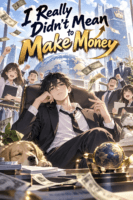
After a family of three transmigrates into a novel, they realize that the protagonist of this old-fashioned story is actually their original body’s eldest uncle. In the original plot, they had been leeching off their uncle, were kicked out of the family early on, and only reappeared at the end as pitiful background characters living in misery.I Really Didn’t Mean to Make Money
After graduating, Chen Mo acquired the Money-Losing System. The more money he lost, the more personal assets he would gain.






0 Comments