Nine Rings C03
by MarineTLChapter 3: Nine-Ring Jade Casket
The woman’s presence was intimidating. As she took her seat, Rogue Tan across from her dared not curse further. Yet his sharp tongue couldn’t resist sarcasm: “Oh, Yu Jingzi, tread carefully. While the Central Plains Ying Gan Hall is a fine place, Chen Si might not be inclined to have a candlelit chat with you.”
His words were laden with meaning, and I understood them well. Reflecting on the situation, something indeed seemed odd.
Chen Si and I grew up together, and I know his character well. He’s very territorial. Once, during a game of hide-and-seek, I accidentally knocked over his building blocks in his room. Before I could apologize, he was already in tears, forcing me to apologize profusely and endure a scolding from my grandfather.
That woman could freely enter and exit Fourth Brother’s room, and he didn’t react, seeming to have already given his tacit approval. That spoke volumes.
Hearing Rogue Tan’s comment, Chen Si finally responded with a cold laugh: “Tan Qiu, you’re a guest in the Central Plains, and as your host, I must show you some respect. But you should know, I’m doing this out of respect for Grandpa Tan, not for you. If your activities over the years were exposed, it would surely disturb Tan Ji’s peace in his later years. Think carefully before you speak.”
Rogue Tan snorted but fell silent.
The nickname “Yu Jingzi” sent chills down my spine, stirring some unpleasant memories. When I was young, my grandfather often mentioned “Lakeside Liu Yu Jing.” It seemed the feng shui masters of this family disliked staying in one place for too long.
In 1930, the Liu Family ancestors passed through the Central Plains and were drawn to the ever-flowing Yellow River, advantageous for their water-related trade. They decided to settle in the central region, tired of their itinerant lifestyle. But fate had other plans. The 1942 Great Henan Famine forced the yet-to-settle Liu Family to pack up and flee south, eventually establishing themselves in the Lingnan Coastal Region.
“Yu Jingzi” was a renowned nickname in the trade. The first “Yu Jingzi,” Liu Sanshui, was rumored to navigate storms at sea without a compass, thanks to years of thorough study. If this woman was also called “Yu Jingzi,” I wondered if she was the second or third generation.
As I pondered, rubbing my numb legs, I initially wanted to hear more about the key they mentioned. But my legs were so numb I could barely stand, so I decided to stop eavesdropping and slowly made my way upstairs.
I wasn’t worried about Fourth Brother doing anything illegal. My grandfather was a stickler for rules, and his apprentices had followed them for years. I’m not unethical either. This business often involves the homeowner’s privacy, so it’s better not to listen.
I closed the door to find the room neatly organized. I opened my suitcase to start unpacking my clothes, pulling out the charging cable I frequently used to place it in the bedside drawer.
I grabbed the drawer handle and pulled, but it wouldn’t budge. The drawer was locked.
I crouched down and wiggled the handle, ruling out the possibility of it being jammed from the inside. I shifted from crouching to kneeling and spotted a distinct keyhole.
Many older cabinets like this come with locks. This wooden cabinet’s style resembled the ones in my grandfather’s old house. After his passing, the house was unoccupied, and many antiques were moved to Fourth Brother’s shop. Some items were quite valuable, extending their use.
This redwood cabinet was likely part of that batch. But why was it still locked? Did my grandfather lock it? If so, the key was probably lost during the move.
I fiddled with the keyhole, an early simple lock. For someone like me, who frequently tinkers with various lock mechanisms, this was a piece of cake.
I sat cross-legged on the floor, took out a thin wire from my bag, much finer than ordinary wire. I bent it into an arc and inserted it into the keyhole, resting my head against the cabinet. The sounds from the lock echoed in my mind.
I forgot to mention, during my full moon celebration, I ignored the cash and clung to a Mortise and Tenon Structure block. Since then, my grandfather showed me various mechanism diagrams, both ancient and modern, wooden mortise and tenon structures, and modern steel structures.
I heard a crisp click, pulled out the wire, and the cabinet door was completely loose.
Locks were child’s play for me at age three. Initially, I played with them for the sense of achievement upon unlocking. Later, to increase the challenge, I timed myself, never taking more than 15 seconds to open a standard padlock.
I pocketed the wire and opened the drawer. Inside was a sizable box, its shape rather peculiar. It seemed carved from a single piece of jade, covered in old mud, with intricately carved patterns that were anything but ordinary.
I wasn’t interested in the jade itself but in the nine silver rings hanging from the box. These rings intertwined and resembled a typical nine-link puzzle, but a closer look revealed differences.
In a standard nine-link puzzle, removing the front ring unlocks the subsequent ones, each linked to the next. However, the nine silver rings on this box couldn’t be removed from the front. The head was fully embedded in the Jade Casket’s lock hole, and the tail was similarly embedded in another lock hole.
But wouldn’t that make it a dead loop?
The Jade Casket felt cold to the touch. I carefully lifted it from the drawer, examining it in my hands. The silver rings were intricately engraved with dragons and phoenixes. It was hard to imagine how the craftsman carved such delicate patterns.
This seemed like an antique. I wondered how my grandfather acquired it. In my education, there’s no lock that can’t be opened, no mechanism that can’t be solved.
Intrigued, I held the Jade Casket and stood up. As the light flickered, I noticed something unusual at the bottom of the Jade Casket. I pushed aside the pile of calligraphy and paintings on the table, placed the box on the surface, and pulled over an old green-shaded desk lamp. I retrieved glasses from my bag and began to study it.
I took out a small flashlight and a flat metal box from my backpack. Holding the Jade Casket with one hand, I shone the flashlight down inch by inch. The jade was exceptionally translucent, carved from a single piece. Through the flashlight’s beam, I could see something inside the box.
But to know what it was, I’d have to open it.
I set down the flashlight, raised the box slightly to examine its bottom, and realized I hadn’t been seeing things.
The craftsman had carved an additional groove at the bottom of the box, containing a pale yellow liquid with golden sediment.
Hmm, what kind of design is this?
———
—The baby’s one-year celebration features the Zhuāzhōu ritual, where items are placed before the child and the one they pick is thought to predict their future, followed by family feasting and blessings.
—A mortise and tenon structure is a classic joinery method where a projecting tenon fits into a matching mortise hole, creating a strong, nail-free connection in woodwork and architecture.
—The nine link puzzle is a traditional Chinese brain teaser with nine interlocking rings that must be removed in a precise sequence, testing logic and patience.
Recommendations

Crazy Gossiping in the Cultivation World
Ning Xu had just transmigrated and was still confused when her senior sister dragged her off to attend the morning lecture. Senior Sister said, “You have three spiritual roots—not very outstanding. Unless something unexpected happens, you’ll probably remain an outer sect disciple for life. If you’re lucky and catch the eye of a true master, you might have a chance to become an inner sect disciple.”To Your Island
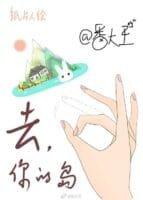
【When we’re in love, you promise me an island. When we break up, you make me so mad I faint. When you’re in trouble, you send me a paper crane: Come to my island. Go to your—wait, there’s actually an island?】Cultivation Is Nothing But Money-Grabbing!
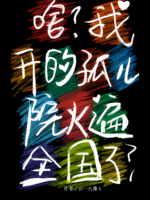
Lian Mu, a modern-day cultivator, failed her tribulation and suffered a backlash. When she woke up, she had been reborn.Orphanage I Opened Went Viral Nationwide
Lu Qingqiang inherited a run-down orphanage, and inside were more than ten starving, pitiful kids crying from hunger.Era: Starting from Mountain Farming and Hunting
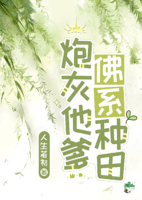
This novel follows the story of Lin Heng, a 60-year-old man who unexpectedly returns to the 1980s, a time of slow-paced life and pure thoughts. He aims to live a happy life with his wife and children, starting with hunting in the mountains and FarmingVillain’s Dad Lives a Laid-Back Farming Life
Zhao Mengcheng transmigrated into the early-deceased father of a villainous family.The Junior Sister hooked Long Aotian with fried chicken
【A naturally flirtatious fried-chicken succubus × a jealous foodie Long Aotian】Transmigrated Life of a Salted Fish Family
After a family of three transmigrates into a novel, they realize that the protagonist of this old-fashioned story is actually their original body’s eldest uncle. In the original plot, they had been leeching off their uncle, were kicked out of the family early on, and only reappeared at the end as pitiful background characters living in misery.Quick Transmigration: Someone Help! The Host is Fierce and Rebellious Again
No fixed CP(Couple Pairing), a female protagonist prone to occasional madness, equipped with top-tier gear, max-level melon-eating, avoids all trouble, stays true to herself, and leaves the rest to karma…







0 Comments