Farm System C89
by MarineTLChapter 89
“From August 27 to September 5, Longxia carried out a locust eradication spray campaign, which ended in complete success.”
“Global News: Longfeng Pesticide, a new type of insecticide, has shown a 97% effectiveness rate against locusts.”
…
As Longxia launched its locust-spraying operation, the news made headlines around the world.
From August 1 to September 5, 52% of the globe experienced locust infestations. The damage to the global economy was catastrophic. Although hard-hit regions like Mali managed to bring the locusts under control, the intense heat had caused a new wave of eggs to hatch. A fresh outbreak was expected by mid-month.
Watching international news, disaster-stricken people everywhere had only one thought: Beg the government to import locust insecticide! They were desperate to be rid of the locusts!
“Mali sends heartfelt congratulations to Longxia on its successful operation and hopes to establish a pesticide trade agreement.”
“Thirty-seven countries, including Utank, are requesting Longxia to open up pesticide exports.”
“Shuilan Alliance…”
…
It wasn’t just the people who wanted pesticide trade—governments in affected countries were also eager to strike deals.
Over the past month, several countries had developed a batch of Acid Rain insecticides. These could kill the Acid Rain locusts, but released large quantities of harmful gases during use—causing environmental disasters nearly as bad as the locusts themselves.
Now, with the emergence of Longxia’s pesticide, the world saw a glimmer of hope.
As international calls grew louder, on September 7, Longxia issued a response—
1. Longxia is willing to cooperate with other countries on pesticide trade.
2. The pesticide is a new agricultural product. According to research by the Longxia Research Institute, locusts sprayed with this pesticide can enhance soil fertility for one year.
3. Longxia will increase its global locust imports and hopes to expand locust trade with other nations.
…
“Enhance soil fertility?”
“A groundbreaking discovery…”
Longxia’s announcement hit like a bolt from the blue. The world was stunned.
Instead of offering vague reassurances, Longxia released a detailed report: 1. Mutated Locust Fertilizer must be neutralized with Longfeng Pesticide; ordinary Acid Rain locusts cannot guarantee soil enrichment. 2. Plants grown in acidic soil contain high levels of acidic compounds, making them inedible for humans and animals. Acid Rain fertilizer only improves soil for one year—reapplication is needed the following year.
Even after the data was published, countries were still reeling.
Though the soil was technically normal, desertification was worsening across the globe. If trees and shrubs could be grown in Acid Rain Soil, it could significantly improve the local climate! More importantly, most countries would have kept such a technology secret. But Longxia had made it public to the world… This was a spirit of openness that shocked and humbled them.
“They had no choice but to announce it.”
At Fengshan Farm, Liu Wensheng sighed as he read the international reactions. In truth, when the bio-fertilizer was first discovered, Longxia had debated whether to keep it under wraps. But as the only country with rising grain production, every move they made was under global scrutiny.
Now that Longxia had decided to ramp up Locust Feed development and imports, it would be impossible to hide. Rather than let the world speculate, it was better to come clean. The Shuilan Environment needed global cooperation—only by improving together could humanity survive this adversity.
“I’ll be gone for a week,” Liu Wensheng said as he packed up his documents. With over a hundred countries now seeking pesticide cooperation with Longxia, he had to report to Jinghe on the progress.
Half an hour later, Liu Wensheng departed.
Qin Yun stopped by the Seed Laboratory, then headed to the Amir Workshop. The farm had established a special research team focused on Amir’s work, and he made a daily round to check for new discoveries…
…
“I contacted Uncle Miguel. He can help you find a job in Weir.” On September 8, in a small town on the outskirts of Ruiwei, Mali, Gianna looked worried and worn. She had been married for eight years and had two sons and a daughter. Her eldest was seven, and her youngest—a baby girl—just two months old.
“What about you and the kids?” Tot asked after lighting a cigarette.
Tot was 27. He used to run a pancake shop in town, but it went under during the food crisis. He then tried to find work in Ruiwei, but with so many unemployed, even a doorman job had over twenty applicants. After half a year, he’d only made 700 Mali coins…
“Sigh.” Gianna let out a long breath. She really couldn’t care for the kids alone, but after two years of poverty, they didn’t even have rice to cook.
They chatted for a bit until the baby started crying. Gianna hurried inside to tend to her.
Tot looked at the tattered diapers in the yard and felt like he was just as worn out and hopeless.
While he was lost in thought, there was a knock at the gate.
“Who is it?” Tot called out.
“Har.”
Tot opened the door. Har was wearing a beige tank top, panting and gripping the doorframe. “Grab your iron rod and net—let’s go.”
“For what?” Tot blinked.
“To make some Mali coins!”
…
Half an hour later, Tot and Har arrived on the outskirts of town.
Their town sat on the southern edge of Ruiwei, near the Mali River, surrounded by rice paddies. Last month’s locust crisis had started with eggs hatching in the dry riverbeds. Most of those locusts had starved to death, but a second wave was likely.
Now the rice fields were littered with locust corpses, reeking with a pungent stench. Some baby locusts buzzed around the dead.
“Let’s get started,” Har said, jumping into action.
An hour earlier, Mali had released major news: 1. Mali had signed an insecticide import agreement with Longxia. Nationwide spraying would begin on September 10. 2. The government would begin purchasing mutated locusts nationwide. Some would be used to improve the local environment; the rest would be sold to Longxia.
According to the procurement notice, dead mutated locusts would fetch 20 Mali coins per jin; live ones, 50 Mali coins per jin. With 1 Longxia Coin equal to 10 Mali coins, Malians instantly realized: Locusts could be turned into cash!
By now, villagers were swarming the rice fields with tools, collecting locusts.
Most of the locusts had died of starvation and were mixed into the dry soil. Seeing that picking them up by hand was faster, many villagers put on gloves and got to work.
By 3 p.m., over 300 villagers had gathered, and the crowd kept growing.
At 3:20, Tot had collected 100 jin of dead locusts. He weighed the bag, then biked to the nearest agricultural center. After removing debris, about 70 jin remained.
By 7:50, Tot walked out with 1,400 Mali coins. Dusk was falling, and many villagers were still combing the fields with flashlights. This time, Tot didn’t go back into the fields. Instead, he set up a sign at the edge: “Buying Locust Corpses – 10 Mali coins/jin. Locust Eggs – 100 Mali coins/jin.”
Villagers had to wait in long lines at the agricultural centers to process their locusts. Compared to that chaos, Tot’s setup was much easier. As soon as he put up the sign, villagers started lining up to sell. He even received three locust blocks.
Tot carefully stored the blocks. Locusts were in high demand now, but the corpses in the fields would only last a week. If Locust Feed could truly improve soil, then sustainable locusts were far more valuable than dead ones.
“September 10: Locust spraying begins in places like Bo’er, Mali. First-day results are excellent.”
“Evening of September 10: 3,000 residents in Bo’er head to wheat fields to clean up locusts.”
…
Over the next two days, locust-spraying news dominated headlines worldwide.
Though Longxia was buying locusts globally, it wasn’t mandatory. Sprayed locusts benefited local soil, and Longxia respected each country’s choice. According to the Shuilan Health Organization, the current global locust population was at least 30 trillion—an unimaginably massive number.
The Longxia Ministry of Agriculture had estimated they would import around one million tons. But by September 13, initial export responses from affected countries totaled three million tons, with another two million possibly to follow.
Even superpowers were stunned.
The main locust-exporting countries were mid-tier or developing nations.
Bo’er, one of the hardest-hit countries, said in an interview, “We need greenery, but we need food even more.”
Bo’er had 72 million people affected. As soon as Longxia announced Locust Feed, the country held three emergency national meetings. In the end, they decided: Bo’er would reserve a small portion of locusts for Acid Rain soil planting, and sell 90% of the locusts to Longxia.
Compared to the locusts, people needed food far more urgently.
As of September 15, 92% of the world’s locust-exporting countries had ceased shipments. Only a few nations like Longxia, Natal, and Weir—those with relatively abundant food supplies—remained as importers.
This collaboration served as a stark reminder to the global community: the food crisis remains a sword hanging over the necks of all nations.
“On September 17, Longxia launched a protective shrubland planting project, aiming to restore 100,000 mu of protective shrub forests in the Three-North region.”
“These protective shrublands are a unique ecological response to the Acid Rain crisis. Longxia is committed to sparing no expense in safeguarding the Three-North ecosystem and slowing desertification.”
“Longxia will focus on supporting Acid Rain locust farming, landscape protection forests, and grassland cultivation…”
…
On September 17, the Longxia Ministry of Agriculture issued a Level-One Protection Bulletin.
According to the original plan, this Locust Feed was intended for urban landscaping. However, feed imports far exceeded expectations. While continuing with urban greening, Longxia has decided to replant protective belts along the Three-North border.
Since 3027, the total area of desertified land nationwide has increased by 52%—an irreversible disaster caused by the decline in vegetation. Desertification brings with it murky air, sandstorms in urban areas, a rise in respiratory illnesses, and a host of other consequences.
Using biological feed to protect the environment may only be a temporary fix, but given the current circumstances, Longxia is doing its best to explore every possible solution.
Recommendations

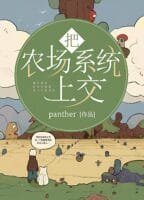
Submitting The Farm System
Qin Yun returned to his hometown after graduation and bound himself to a farming system. The moment he obtained the system, Qin Yun decisively turned it over to the authorities.Rebirth A Stay-at-Home Dad’s Leisurely Life
Cao Shujie, who had died suddenly after years of working late into the night, was reborn back in 2011. In this life, he wanted to live a little more easily—spend more time with his wife and kids, take his child and dog for walks when he’s not busy, and earn a bit of living money along the way!Nine Rings
Over three thousand years ago, a massive expedition ventured into the snow-covered forests of the northwest to construct a so-called “Immortal Palace” for a legendary emperor. That entire team vanished without a trace, swallowed by the tides of history.Reborn in the 1980s with a Money-Grubbing System
Smashed back to the 1980s by the stingiest Treasure Bowl in history, Qian Jianing has to help it gather enough wealth energy to return to the Immortal Realm. Heart aching, the Treasure Bowl reluctantly coughs up its collection of random junk from the Immortal Realm: fallen leaves, leftover fruit pits, and small game prizes won from playing Dou Dizhu…Everyone in the Family Except Me is a Transmigrated Bigshot
Four-year-old Juanjuan was unloved by her father, ignored by her mother, and bullied by her older brothers. Left to shoulder the burden of a broken family all on her own.After My Daughter Died of Depression, I Was Reborn!
Shen Fei, a highly successful man worth trillions, found his life crumbling at its peak when his daughter took her own life due to depression. Unable to cope with the shock, he fell into unconsciousness. When he woke up, he found himself back twenty years in the past.After the Villain Awakens, He Become the Enemy’s Favorite Through Misunderstanding
Liu Ming, heir to District One’s ruling family, discovers that his reckless hatred toward the protagonist group was never truly his own—it was the plot forcing him into the role of a doomed cannon-fodder villain. With his death already written into the story, he refuses both redemption as a sidekick and destruction as a true villain.Being a Villainess in a Melodramatic Novel (GL)
After binding to a broken system, Yu Liuxue must complete the dying wishes of female supporting characters—otherwise, she’ll die.To Your Island
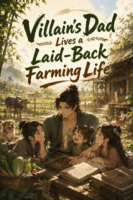
【When we’re in love, you promise me an island. When we break up, you make me so mad I faint. When you’re in trouble, you send me a paper crane: Come to my island. Go to your—wait, there’s actually an island?】Villain’s Dad Lives a Laid-Back Farming Life
Zhao Mengcheng transmigrated into the early-deceased father of a villainous family.







0 Comments